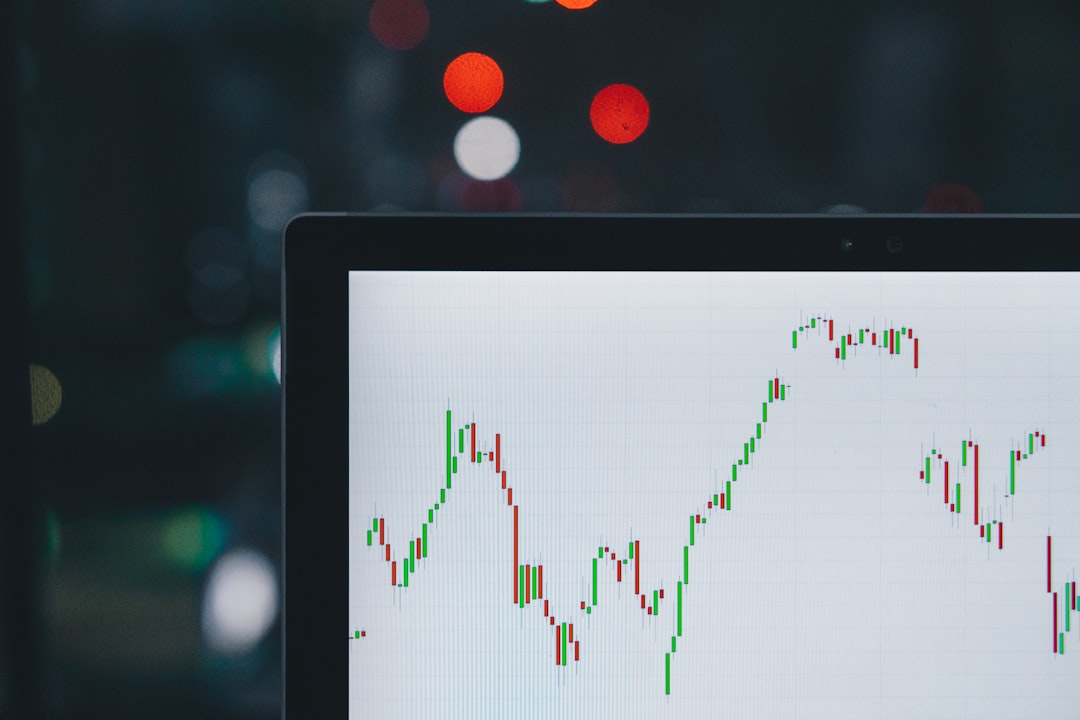
The stock market, a realm of constant flux and immense opportunity, has always been a territory for those who can expertly navigate its unpredictable currents. For centuries, successful traders have relied on a blend of intuition, experience, and diligent research. However, in the modern era, a powerful new ally has emerged, fundamentally reshaping how traders approach their craft: predictive analytics. Far from being a futuristic gimmick, predictive analytics, powered by artificial intelligence (AI) and machine learning (ML), is now a tangible force, empowering traders to make demonstrably smarter decisions, mitigate risks, and capitalize on opportunities with unprecedented precision.
This article will delve into the multifaceted ways predictive analytics is transforming the trading landscape, moving beyond opaque algorithms to reveal the concrete mechanisms and tangible benefits it offers. We will explore how it sharpens forecasting accuracy, eradicates emotional biases, uncovers hidden market signals, and acts as a vital safeguard against costly errors.
Before we laud the advancements of predictive analytics, it is crucial to acknowledge the inherent challenges faced by traders relying on traditional methods. While experience and a keen understanding of market fundamentals are invaluable, human psychology and the sheer volume of information can often be insurmountable hurdles.
The Human Element: A Double-Edged Sword
Traders are, by nature, human. This brings to the table a wealth of invaluable qualities: the ability to connect disparate pieces of information, an understanding of broader economic narratives, and the capacity for creative problem-solving. However, it also introduces elements that can significantly impair decision-making.
Anxiety and Fear: The Saboteurs of Rationality
When markets gyrate, fear can grip even the most seasoned trader. This primal emotion can lead to selling at the bottom during a downturn, driven by an overwhelming desire to protect capital, even if the long-term prospects remain strong. Conversely, greed can fuel excessive risk-taking, pushing traders to chase astronomical gains and ignore early warning signs. Predictive analytics, by its very nature, operates outside the realm of human emotion. It processes data objectively, offering recommendations based purely on statistical probabilities and historical patterns, thereby providing a crucial bulwark against emotional decision-making.
Overconfidence and Confirmation Bias
Equally detrimental is overconfidence, often born from a string of successful trades. This can lead traders to dismiss analytical warnings and rely on gut feelings, believing they possess an almost infallible sense of the market. Confirmation bias further entrenches this, causing traders to seek out information that supports their existing beliefs while ignoring contradictory evidence. AI-driven systems, on the other hand, are designed to constantly evaluate new data and adjust their predictions accordingly, remaining immune to the subjective biases that plague human judgment.
The Information Deluge: A Tsunami of Data
The modern financial world is awash in data. Stock prices, trading volumes, company earnings, economic indicators, geopolitical news, social media sentiment – the list is endless. For a human trader, sifting through this torrent of information, identifying the relevant pieces, and synthesizing them into actionable insights is a Herculean task. Even with dedicated research teams, the sheer speed at which information flows makes it nearly impossible to stay ahead.
Manual Analysis: The Bottleneck of Speed
Traditional analysis, while thorough, is inherently time-consuming. Examining financial statements, interpreting complex charts, and reading countless news articles takes hours, if not days. In the fast-paced stock market, where milliseconds can mean the difference between profit and loss, this manual approach often renders valuable insights obsolete by the time they are processed. Predictive analytics, however, can process millions of data points in real-time, identifying patterns and generating forecasts at a speed that human analysts simply cannot match.
Identifying Signal in the Noise
A key challenge for any trader is distinguishing the true market signals from the background noise. A single news headline, a minor economic report, or a social media buzz can be amplified by human interpretation, leading to misjudgments. Predictive models are trained to identify statistically significant patterns and correlations, filtering out irrelevant information and focusing on the drivers that have a demonstrable impact on price movements.
In exploring the benefits of predictive analytics in trading, a related article that delves deeper into the topic is available at this link. This article provides valuable insights into how traders can leverage data-driven strategies to enhance their decision-making processes, ultimately leading to more informed and profitable trades. By understanding the principles of predictive analytics, traders can better navigate market fluctuations and optimize their investment strategies.
The Power of AI-Driven Price Forecasting
At the heart of predictive analytics’ impact on trading lies its ability to forecast price movements with a level of accuracy that was once the stuff of science fiction. Leveraging advanced AI and ML algorithms, these systems are now capable of transforming raw data into tangible predictions.
Unveiling Trends and Predicting the Future
The core of AI-driven price forecasting is the identification and extrapolation of discernible trends within historical market data. Algorithms are trained on vast datasets spanning years, analyzing patterns in price action, volume, volatility, and correlation with various economic indicators. This allows them to recognize recurring patterns and anticipate future movements.
The TradeSmith An-E Case Study
Platforms like TradeSmith’s An-E exemplify this capability. By analyzing millions of data points daily across thousands of stocks, An-E generates one-month price predictions. The significance of this lies not just in the prediction itself, but in its high accuracy and its ability to anticipate moves before the broader market reacts. This gives traders a critical edge, allowing them to position themselves advantageously ahead of significant price shifts. The sophistication of these models lies in their ability to learn and adapt, constantly refining their predictions as new data emerges. They move beyond simple linear regression to employ complex neural networks and ensemble methods that capture non-linear relationships and subtle market dynamics.
The Role of Machine Learning in Pattern Recognition
Machine learning algorithms are the engine behind this predictive power. They can process and learn from data without being explicitly programmed for every possible scenario. This means that as market conditions evolve, the algorithms can adapt and improve their forecasting capabilities. They excel at identifying complex correlations that a human might miss, such as the subtle interplay between interest rate expectations, commodity prices, and currency fluctuations.
The Advantage of Real-Time Agility
The stock market is a dynamic entity, and information arrives at warp speed. Predictive analytics thrives in this environment, offering a crucial advantage in real-time analysis and response.
Exluno’s Adaptive Learning for Emerging Trends
New tools, such as Exluno‘s platform launched in late 2025, are pushing the boundaries of real-time market analysis. Their use of adaptive learning allows them to continuously identify emerging trends and market anomalies in real time. This means traders aren’t just reacting to past events; they are being alerted to developing situations as they unfold. This agility is paramount in markets characterized by rapid shifts, allowing traders to pivot their strategies or seize fleeting opportunities before they disappear. The adaptive nature means the models aren’t static; they continuously recalibrate their understanding of market behavior as new data flows in, ensuring their predictions remain relevant and timely.
Identifying Anomalies Before They Disrupt
Beyond predicting straightforward trends, predictive analytics excels at detecting anomalies – deviations from expected behavior that could signal either significant opportunities or potential risks. These could be unusual trading volumes for a particular stock, a sudden divergence in price movement from its sector peers, or unexpected correlations between seemingly unrelated assets. Early detection of such anomalies allows traders to investigate further, either to capitalize on a mispriced asset or to steer clear of a brewing problem.
Eradicating Emotional Bias: The Logic of the Machine
One of the most profound contributions of predictive analytics to trading is its ability to strip away the emotional overlay that so often clouds human judgment. By providing objective, data-driven insights, these systems offer a more rational and consistent approach to trading.
The Tyranny of Fear and Greed Overcome
As discussed earlier, human emotions like fear and greed can lead to impulsive decisions that often result in losses. Predictive analytics provides a much-needed counterbalance. When a trader feels the urge to sell everything during a market panic, an AI system will continue to evaluate the underlying data, offering a forecast based on historical resilience, market fundamentals, and probabilities, rather than succumbing to the prevailing sentiment.
Emotionless, Calculated Forecasts
Algorithms do not experience anxiety. They do not fall prey to euphoria. Their forecasts are the result of complex modeling of pricing behaviors and momentum signals, devoid of any human emotional bias. This offers traders a disciplined framework, allowing them to adhere to their trading plans even when market volatility is high. The outputs from these systems serve as a constant reminder of the objective reality of market dynamics, helping traders to maintain composure and execute their strategies with greater discipline.
The Consistency of Data-Driven Decisions
Humans are prone to inconsistency. A trader who is successful one day might make a series of poor decisions the next due to fatigue, stress, or changing market perceptions. Predictive analytics, however, offers a consistent stream of emotionless, calculated forecasts. This consistency allows traders to build more robust trading plans and backtest their strategies with a higher degree of confidence, knowing that the analytical engine driving them is not subject to the vagaries of human temperament. This reliability is crucial for long-term success in the markets.
Harnessing the Power of News and Sentiment Analysis
The stock market is not just driven by numbers; it is also profoundly influenced by human sentiment and the flow of information. Predictive analytics is increasingly adept at incorporating these qualitative factors into its quantitative models.
Real-Time News Consumption and Impact Scoring
In today’s interconnected world, news travels at the speed of light. However, manually processing this avalanche of information is a near impossibility for individual traders. Advanced AI platforms are now equipped to scan financial news, government reports, and press releases within seconds.
Going Beyond Manual Analysis
Algorithms can assign impact and sentiment scores to this incoming news, allowing traders to act on breaking news before manual analysis is even possible [5]. This means a trader could be alerted to the positive market reaction to a company’s earnings release or the negative implications of a new regulatory announcement almost instantaneously, enabling them to adjust their positions proactively. The sophistication lies in understanding not just the keywords in a report but the context and the potential market implications of the information presented.
The Nuances of Social Media Sentiment
Beyond formal news sources, social media platforms have become a significant influencer of market sentiment. While often dismissed as unreliable, the collective chatter on platforms like Twitter (now X) and Reddit can offer early indications of shifts in investor sentiment and can even foreshadow significant market moves.
Solvent.Life’s GPT for Sentiment Analysis
Platforms like Solvent.Life, leveraging its proprietary Solvent GPT technology, are at the forefront of using AI to analyze news and, crucially, social media content. By processing vast amounts of text, these algorithms can gauge the prevailing sentiment towards specific stocks, sectors, or the market as a whole. This sentiment analysis, when integrated with traditional price and volume data, provides a more holistic picture of market dynamics, allowing traders to capitalize on sentiment-driven rallies or anticipate sharp downturns fueled by negative public perception. This goes beyond simple keyword counting and involves natural language processing to understand the nuances of human expression, including sarcasm and subtle implications.
In exploring the ways predictive analytics enhances trading strategies, you might find the insights in this related article particularly enlightening. It delves into how data-driven decision-making can significantly improve traders’ performance by providing them with actionable forecasts and trends. By understanding these analytical tools, traders can navigate the complexities of the market with greater confidence and precision.
Preventing Errors and Safeguarding Against Risk
| Benefits of Predictive Analytics for Traders | Explanation |
|---|---|
| Improved Forecasting | Predictive analytics helps traders forecast market trends and stock prices more accurately. |
| Risk Management | Traders can use predictive analytics to assess and manage potential risks associated with their investments. |
| Identifying Opportunities | By analyzing historical data, traders can identify potential investment opportunities and make informed decisions. |
| Behavioral Analysis | Predictive analytics can be used to analyze market behavior and make predictions based on past patterns. |
| Real-time Insights | Traders can leverage predictive analytics to gain real-time insights into market movements and make timely decisions. |
The pursuit of profit in the stock market inevitably involves risk. Predictive analytics, however, plays a crucial role not only in identifying opportunities but also in mitigating potential losses by acting as an early warning system and preventing costly trading errors.
Early Warning Systems for Market Disruptions
The financial markets are susceptible to unforeseen events and operational glitches. Predictive analytics can serve as a vital early warning system to detect abnormal behavior that might precede significant market disruptions.
Case-Based Reasoning for Anomaly Detection
According to Tabb Group reports, predictive analytics, particularly through techniques like Case-Based Reasoning, can effectively detect abnormal client behavior, heightened risk exposures, and potential trading glitches before they cause market disruptions [6]. This involves comparing current trading patterns and market conditions against historical instances of successful and problematic trades. If a current situation exhibits characteristics similar to past incidents that led to losses or significant volatility, the system can flag it for review. This proactive approach allows institutions and traders to intervene, adjust risk parameters, or halt trading before widespread damage occurs. Detecting an unusual spike in algorithmic trading activity from one particular source, for example, could alert regulators to a potential manipulation attempt.
Minimizing Human Error in Execution
Humans are fallible, and errors in trade execution can be costly. Whether it’s a misplaced decimal point, a mistaken order type, or a lapse in judgment during a critical moment, these errors can lead to significant financial losses.
Real-Time Error Detection and Prevention
Predictive analytics can play a role in real-time by monitoring trade orders for anomalies or deviations from pre-defined parameters. If an order seems illogical based on current market conditions or the trader’s historical patterns, the system can flag it for review or even automatically cancel it. This acts as a safety net, ensuring that impulsive or erroneous trades are identified and corrected before they can impact the portfolio. For high-frequency traders, where trades are executed in fractions of a second, this error detection capability can be a game-changer.
Advanced Platforms: Synthesizing Complexity into Actionable Insights
The true power of predictive analytics is magnified when integrated into sophisticated trading platforms that can distill complex data into understandable and actionable opportunities for traders.
The Evolution of AI Trading Companions
Leading AI platforms are no longer just data processors; they are evolving into intelligent trading companions, assisting traders at every step of their decision-making process.
Trade Ideas’ Virtual Assistant Holly
Platforms like Trade Ideas boast virtual assistants like Holly, which analyzes over 1 million scenarios daily. This means Holly is not just looking at one or two trading strategies; it is simulating thousands of potential market outcomes and identifying the most probable profitable scenarios based on real-time data. This level of comprehensive scenario analysis is simply impossible for a human to achieve. Holly acts as a tireless analyst, identifying potential trading setups that align with specific risk/reward profiles and probabilities.
Kavout for Stock Ranking and Selection
In the realm of stock selection, platforms like Kavout utilize predictive analytics to provide sophisticated stock rankings. Instead of relying on basic financial metrics, Kavout’s AI analyzes a multitude of factors, including fundamental data, sentiment, and technical indicators, to generate a ranking of stocks based on their predicted future performance. This helps traders to more efficiently identify promising investment candidates from a universe of thousands of stocks, saving valuable research time and focusing on the most statistically favorable opportunities.
Solvent.Life’s Integrated Intelligence
Solvent.Life, with its Solvent GPT for news and social media analysis, further highlights the trend towards integrated AI solutions. By combining news sentiment analysis with other data inputs, these platforms can offer a more comprehensive and nuanced view of market opportunities. They simplify complex datasets into actionable opportunities, presenting traders with clear recommendations or alerts that can be easily understood and acted upon. This isn’t about replacing the trader; it’s about augmenting their capabilities with powerful analytical tools.
The Democratization of Sophisticated Analysis
Historically, sophisticated market analysis tools were accessible only to large institutional investors with deep pockets. Predictive analytics is playing a significant role in democratizing this access. As these AI-powered platforms become more prevalent and accessible, individual traders are gaining the ability to leverage the same advanced analytical capabilities that were once exclusive to the top tier of the financial world. This levels the playing field, empowering more traders to make smarter, data-driven decisions and potentially achieve greater success.
Conclusion: The Future of Trading is Predictive
The stock market has always been about foresight. Predictive analytics has simply amplified our ability to achieve it. By embracing AI and machine learning, traders are not just gaining a competitive edge; they are transforming their approach to the market. From the sharp accuracy of AI-driven price forecasting to the eradication of emotional bias, the real-time detection of trends and anomalies, the intelligent integration of news and sentiment, and the crucial safeguard against errors, predictive analytics is proving to be an indispensable tool for the modern trader.
The platforms and technologies discussed – TradeSmith’s An-E, Exluno’s adaptive learning, Solvent.Life’s Solvent GPT, Kavout’s rankings, and Trade Ideas’ Holly – are not merely tools; they are indicators of a fundamental shift. They represent a future where trading decisions are more informed, more rational, and ultimately, smarter. As these technologies continue to evolve, the traders who effectively integrate them into their strategies will undoubtedly be the ones who navigate the complexities of the stock market with greater confidence and success. The future of trading is not just about being present; it’s about being predictably ahead.
FAQs
What is predictive analytics?
Predictive analytics is the use of data, statistical algorithms, and machine learning techniques to identify the likelihood of future outcomes based on historical data.
How does predictive analytics help traders make smarter decisions?
Predictive analytics helps traders make smarter decisions by analyzing historical market data to identify patterns and trends, forecast future market movements, and assess the potential risks and opportunities associated with different trading strategies.
What are some common applications of predictive analytics in trading?
Common applications of predictive analytics in trading include forecasting stock prices, identifying trading signals, optimizing trading strategies, and managing risk through predictive modeling.
What are the benefits of using predictive analytics in trading?
The benefits of using predictive analytics in trading include improved decision-making, enhanced risk management, increased profitability, and the ability to capitalize on market opportunities more effectively.
What are some challenges associated with using predictive analytics in trading?
Challenges associated with using predictive analytics in trading include data quality issues, model accuracy and reliability, overfitting, and the need for continuous adaptation to changing market conditions.