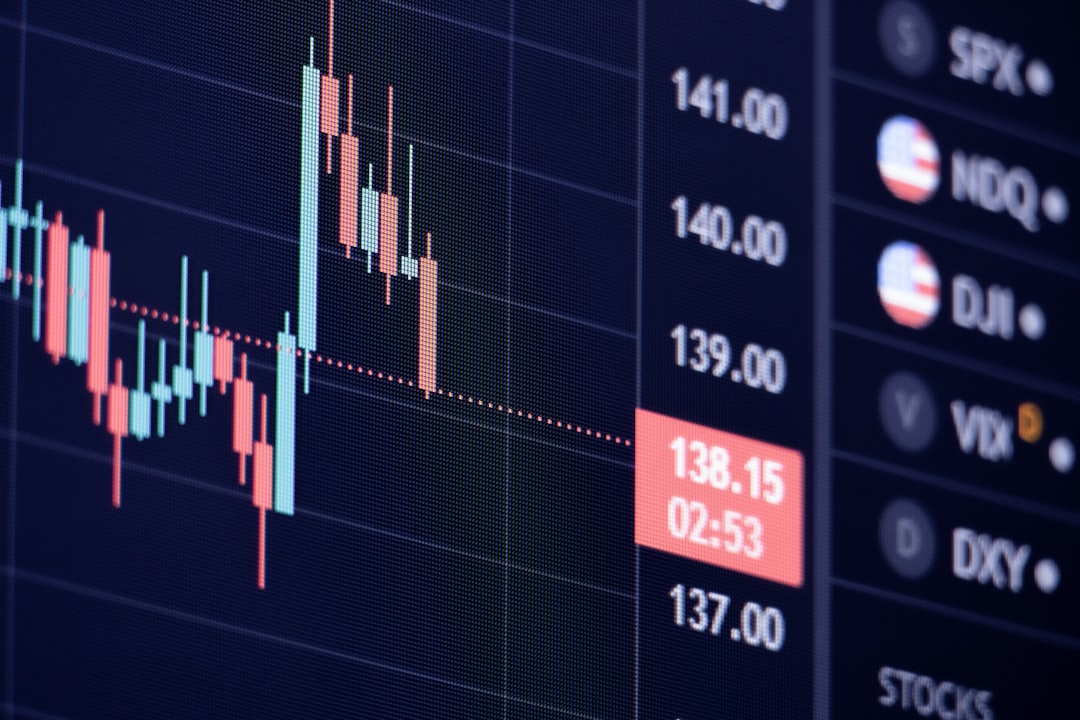
In the fast-paced world of financial markets, few events excite traders as much as a breakout. The prospect of a significant price move, signaling the potential for substantial profits, is always alluring. However, the thrill of a breakout can quickly turn into frustration when it proves to be a false signal – a “fakeout” – trapping unwary participants in losing trades. Fortunately, with the evolution of trading technology and analytical techniques, traders now have access to sophisticated tools and strategies designed to discern genuine breakouts from deceptive ones. This article will delve into these advanced detection methods, empowering you to navigate the choppy waters of breakouts with greater confidence and precision.
Before we explore the solutions, it’s crucial to understand why fakeouts occur. Breakouts, by definition, happen when the price of an asset decisively moves beyond a preceding trading range, such as a support or resistance level, a trendline, or a chart pattern. The expectation is that this newfound momentum will propel the price further in the direction of the breakout. However, the market is a complex ecosystem influenced by numerous factors, and not all price movements are created equal.
The Psychology of Market Manipulation
At its core, fakeouts often stem from a interplay of market psychology and strategic maneuvering by larger market participants. Consider a scenario where a support level is clearly identifiable on a chart. As the price approaches this level, many retail traders anticipate a bounce and place buy orders below the support, expecting the price to reverse. Conversely, if the price breaks below this level, these “stop-loss” orders are triggered, generating selling pressure.
However, large institutions, often referred to as “whales” or “smart money,” can exploit this predictable behavior. They might deliberately push the price below a perceived support level to trigger these stop-loss orders, creating a surge of sell-side liquidity. Once enough selling has occurred and the market appears to be breaking down, these same institutions can then reverse their positions, buying at the now artificially depressed prices. This leads to a swift reversal, leaving those who traded on the initial breakout signal caught on the wrong side. Similarly, institutions can engineer fakeouts above resistance levels to trap short-sellers.
Technical Factors Contributing to Fakeouts
Beyond deliberate manipulation, several technical factors can contribute to false breakouts:
- Insufficient Volume: A genuine breakout is typically fueled by significant buying or selling pressure, reflected in increased trading volume. A breakout occurring on low or declining volume suggests a lack of conviction from market participants and is more prone to reversal. Think of it like a weak gust of wind trying to push a heavy door open – it might budge a little, but it won’t stay open.
- News-Driven Volatility: While news can initiate genuine breakouts, it can also cause temporary price spikes that quickly fade. A sudden announcement might trigger an immediate price reaction, but if the underlying fundamentals don’t support further movement, the price can snap back, creating a fakeout.
- Over-Extended Momentum: Sometimes, an asset’s price might be in a strong trend. When a breakout attempt is made from an already parabolic or extremely extended move, it’s more likely to be a “blow-off top” or a “shakeout” rather than the start of a new extended trend. The market may be fatigued.
- Algorithmic Trading: The proliferation of high-frequency trading (HFT) algorithms can also contribute to volatility and fakeouts. These algorithms can react to price levels and patterns instantaneously, sometimes leading to rapid price swings that overshoot and then reverse.
In the pursuit of refining trading strategies, understanding market dynamics is crucial, particularly when it comes to avoiding false breakouts. A related article that delves deeper into this topic is available at How to Avoid False Breakouts Using Advanced Detection Tools. This resource provides valuable insights and advanced techniques that traders can employ to enhance their decision-making processes and improve their overall trading performance.
Advanced Detection Tools: The New Frontier
The landscape of trading tools has dramatically advanced, offering traders unprecedented capabilities to analyze market behavior and identify genuine breakouts. Gone are the days of relying solely on simple chart patterns and basic indicators. Today, traders can leverage technology that incorporates artificial intelligence, complex algorithms, and deep market data analysis.
AI-Driven False-Breakout Detection Algorithms
A significant leap forward in breakout analysis comes from the integration of Artificial Intelligence. As exemplified by the recent launch of FXSpire’s AI-driven false-breakout detection algorithm for EUR/USD on March 20, 2025, these tools are designed to process vast amounts of market data in real-time, identifying subtle nuances that human traders might miss.
FXSpire’s system, for instance, utilizes a sophisticated approach that combines pattern recognition with trend and momentum confirmation. This means the algorithm doesn’t just look at price crossing a level. It analyzes the characteristics of that price movement. Is the pattern leading up to the breakout consistent with a strong directional bias? Is the momentum building or fading as the breakout occurs? These are the critical questions an AI system can answer with a higher degree of accuracy. By filtering out weak breakout signals before execution, these AI tools aim to significantly reduce the occurrence of fakeouts.
How AI Enhances Detection
- Real-time Analysis: AI algorithms operate at speeds far exceeding human capabilities, allowing for continuous monitoring of market conditions and instant identification of potential fakeouts as they emerge.
- Pattern Recognition Beyond the Obvious: AI can be trained to recognize complex and multi-dimensional price patterns that might not be immediately apparent to the naked eye, offering a deeper understanding of underlying market sentiment.
- Adaptive Learning: Advanced AI models can learn from past trading data and adapt their detection parameters over time, improving their accuracy and effectiveness as market dynamics evolve.
Volume-Based Filters: Unveiling True Conviction
Volume has always been a critical component of breakout analysis, but newer tools have significantly enhanced our ability to interpret its implications. Beyond simply observing an uptick in volume, advanced tools provide deeper insights into the nature of that volume and its potential implications.
- Volume Profile: Instead of just looking at total volume over a period, Volume Profile displays trading volume at specific price levels within that period. This reveals where the most trading activity has occurred historically. A breakout through a significant resistance level with high volume at that level, and especially a high Volume Area of Control (VAOC), suggests strong institutional interest and a higher probability of a sustained move. Conversely, if the breakout occurs through levels with low volume profile, it indicates a lack of participation and a higher risk of a fakeout.
- Market Delta: Market Delta measures the difference between aggressive buy orders and aggressive sell orders. A positive delta indicates that more aggressive buying is occurring, while a negative delta suggests more aggressive selling. A genuine breakout should be accompanied by a strong and sustained delta confirming the direction of the move. If prices are moving higher but the delta is negative or declining, it signals underlying selling pressure and potential for a fakeout.
- Heatmaps: Heatmaps can visualize order flow and liquidity in the market across different price levels. They can highlight areas where large buy or sell orders are clustered, indicating potential support or resistance zones. A breakout that moves through areas of high liquidity without significant order flow in its direction might be a warning sign of a trap.
Practical Application of Volume-Based Filters
Imagine a stock breaking out above its all-time high. A simple volume check might show increased trading activity. However, by using Volume Profile, you might see that the breakthrough occurred through a price level with historically low volume. This lack of prior trading interest at that level makes the breakout less convincing. If, concurrently, Market Delta is showing a decline or turning negative, it suggests that despite the price rise, aggressive sellers are becoming more active, a strong indicator of a potential fakeout.
Confirmation Strategies: Patience as a Virtue

In the pursuit of capturing breakout opportunities, the temptation to enter a trade the moment a level is breached can be overwhelming. However, recent trading guides and experienced traders increasingly emphasize the importance of patience and confirmation. This shift in focus is a direct response to the prevalence of fakeouts.
Waiting for Candle Close Confirmation
A cornerstone of modern breakout trading strategy is to wait for candle close confirmation. Instead of entering a trade the instant price pierces a new level, traders are advised to wait until the trading candle on their chosen timeframe has fully formed.
- What is Candle Close Confirmation? This means waiting for the trading period (e.g., a 1-hour candle, a daily candle) to conclude and for the closing price of that candle to be decisively beyond the breakout level.
- Why is it Important? A price can briefly spike through a level due to short-term buying or selling pressure, only to retreat back within the previous range by the end of the candle. Waiting for the close provides a more reliable indication of whether that level has truly been overcome and sustained. If the candle closes firmly above resistance or below support, the probability of the breakout being genuine increases significantly.
The Psychology of Confirmation
This strategy taps into a fundamental principle of technical analysis: patterns are more reliable when they are confirmed by subsequent price action. It acknowledges that initial price movements can be volatile and unpredictable, but a sustained move beyond a key level, as indicated by a candle close, demonstrates greater market conviction.
Multi-Timeframe Analysis: The Big Picture View
Another crucial confirmation strategy involves cross-checking breakouts across higher timeframes. A breakout that appears significant on a 5-minute chart might be entirely insignificant or even a fakeout within the context of a daily or weekly chart.
- The Power of Higher Timeframes: Higher timeframes (e.g., daily, weekly, monthly charts) represent broader market sentiment and long-term trends. A breakout that is confirmed on a higher timeframe, meaning the price closes beyond a significant level on that timeframe, is generally considered more robust and likely to continue.
- Identifying Discrepancies: If you observe a breakout signal on a shorter timeframe but the price is struggling to move beyond key levels on higher timeframes, it’s a strong warning sign. This discrepancy suggests that the short-term breakout might be an anomaly or a trap engineered to lure traders in.
Integrating Timeframes Effectively
A common approach is to use longer timeframes for identifying major support and resistance levels and overall trend direction. Then, shorter timeframes can be used for precise entry timing after a breakout has been confirmed on the longer timeframe. For example, you might see a bullish flag pattern form on an hourly chart, suggesting a potential breakout. However, if the daily chart shows the price approaching a strong long-term resistance level, you would exercise caution and wait for confirmation on the daily chart before entering a long position based on the hourly signal.
Momentum and Volatility Screening: Gauging Market Exhaustion

The conditions surrounding a breakout attempt are as important as the breakout itself. Advanced detection tools and strategies now focus on screening for specific momentum and volatility signals that can either validate or invalidate a breakout.
Identifying Stretched Momentum
One of the most critical screening criteria is to avoid breakouts when momentum is already stretched. When an asset’s price has been in a strong, one-directional move for an extended period, the momentum indicators often reflect this.
- Overbought/Oversold Conditions: Indicators like the Relative Strength Index (RSI) or Stochastic Oscillator can become extremely overbought in an uptrend or oversold in a downtrend. A breakout occurring when these indicators are already in extreme territory may foreshadow a reversal or consolidation rather than a continuation.
- Divergence: A powerful sign of weakening momentum is divergence. If the price of an asset is making new highs, but a momentum indicator is making lower highs (bearish divergence), it suggests that the underlying buying pressure is waning, and a reversal is more likely. The opposite holds true for bullish divergence in a downtrend.
Practical Examples of Stretched Momentum
Consider a stock that has rallied 50% in the last two weeks. The RSI is hovering around 80, and the MACD histogram is showing declining momentum. If this stock then attempts to break out of a small consolidation pattern, it’s a much higher-risk proposition than a breakout from a consolidating range where momentum is building constructively. This is because the market is likely due for a pause or correction after such a significant run.
Monitoring Volatility for Healthier Setups
Volatility indicators can also provide valuable insights into the health of a potential breakout setup.
- Declining Average True Range (ATR): The ATR measures price volatility. A declining ATR leading up to a breakout can signal that the market is consolidating and building pressure. As this pressure is released in a genuine breakout, the ATR might then begin to increase, confirming the new move. However, a breakout occurring when the ATR is already very high and choppy can be a sign of erratic price action and an increased risk of a fakeout. Conversely, a declining ATR can ALSO indicate tightening price ranges before a significant move, so context is key.
- Flattening MACD Histogram: The MACD histogram measures the distance between the MACD line and the signal line, indicating the strength of the underlying momentum trend. A flattening MACD histogram, especially after sustained growth, can suggest that the momentum is starting to lose steam. If a breakout occurs when the histogram is flattening or showing bearish divergence, it’s a red flag. A healthy breakout would ideally be accompanied by a MACD histogram that is expanding and confirming the direction of the move.
The Role of Volatility in Confirming Breakouts
A genuine breakout often involves an expansion of volatility as new capital enters the market to drive the price. However, this expansion needs to be measured and directional. Erratic, high volatility without clear directional conviction often precedes sharp reversals, making it a key area to monitor when assessing breakout validity.
In the quest to enhance trading strategies, many investors find it beneficial to explore various techniques that can help them identify market trends more accurately. A related article titled Advanced Trading Strategies for Navigating Market Volatility delves into different methodologies that can complement the use of advanced detection tools. By understanding these strategies, traders can better position themselves to avoid false breakouts and make more informed decisions in their trading endeavors.
Integrating Tools for Holistic Analysis
| Advanced Detection Tools | False Breakout Avoidance |
|---|---|
| Volume Analysis | Identify abnormal volume patterns |
| Price Action Analysis | Confirm breakout with strong price movement |
| Technical Indicators | Use indicators to validate breakout signals |
| Market Sentiment Analysis | Consider market sentiment before confirming breakout |
The most effective approach to avoiding false breakouts lies not in relying on a single tool or indicator, but in integrating multiple advanced detection methods for a holistic analysis. The recent trends in trading guidance strongly advocate for this comprehensive strategy.
The Synergy of Multiple Indicators
Imagine a scenario where you identify a potential breakout on your chart. Instead of acting immediately, you can then:
- Check AI-Driven Alerts: See if an AI algorithm flags this specific breakout scenario as potentially weak or strong.
- Analyze Volume Profile: Examine the volume profile of the resistance or support level being tested. Is there significant historical trading at this level?
- Review Market Delta and Heatmaps: Look for confirmation of aggressive buying or selling matching the breakout direction.
- Confirm on Higher Timeframes: Ensure the breakout is aligned with the trend on daily or weekly charts.
- Assess Momentum and Volatility: Evaluate RSI, MACD, and ATR for signs of stretched momentum or unusual volatility.
Building a Robust Trading Plan
By combining these elements, you can build a robust trading plan that significantly reduces your exposure to fakeouts. This disciplined approach emphasizes:
- Risk Management: Even with advanced tools, no trading strategy is foolproof. Always employ proper risk management techniques, such as setting stop-loss orders and never risking more than a small percentage of your capital on any single trade.
- Continuous Learning: The financial markets are constantly evolving, and so are the tools and strategies used to navigate them. Stay informed about the latest technological advancements and adapt your approach accordingly.
- Backtesting and Paper Trading: Before committing real capital to any new strategy, thoroughly backtest it on historical data and then practice with paper trading accounts. This will help you refine your approach and gain confidence in its efficacy.
In conclusion, while the allure of breakouts remains a powerful force in trading, the risks associated with false signals are undeniably significant. However, by embracing the advancements in trading technology, understanding the underlying dynamics of market moves, and adopting a disciplined approach to confirmation and risk management, traders can now equip themselves with powerful tools to navigate these challenging yet potentially rewarding market events. The future of breakout trading lies in an informed, technologically augmented, and patient approach, allowing you to distinguish the genuine opportunities from the deceptive traps.
FAQs
What are false breakouts in trading?
False breakouts occur when the price of a security moves beyond a certain level of support or resistance, only to reverse and move back within the previous range. This can lead to traders entering positions based on the breakout, only to suffer losses when the price reverses.
What are some common causes of false breakouts?
False breakouts can be caused by market manipulation, lack of liquidity, or sudden news events that cause temporary price spikes. Additionally, technical indicators and chart patterns may give false signals, leading to traders entering positions prematurely.
How can advanced detection tools help in avoiding false breakouts?
Advanced detection tools, such as volume analysis, volatility measures, and advanced chart patterns, can provide traders with more accurate signals to distinguish between true and false breakouts. These tools can help traders confirm the strength of a breakout before entering a position.
What are some examples of advanced detection tools used to avoid false breakouts?
Examples of advanced detection tools include the Average True Range (ATR) indicator, Bollinger Bands, Volume Profile, and the use of multiple time frame analysis. These tools can help traders assess the strength and validity of a breakout before making trading decisions.
What are some best practices for using advanced detection tools to avoid false breakouts?
Traders should combine multiple advanced detection tools to confirm breakout signals, rather than relying on a single indicator. Additionally, it’s important to consider the overall market context and use risk management techniques to minimize potential losses from false breakouts.