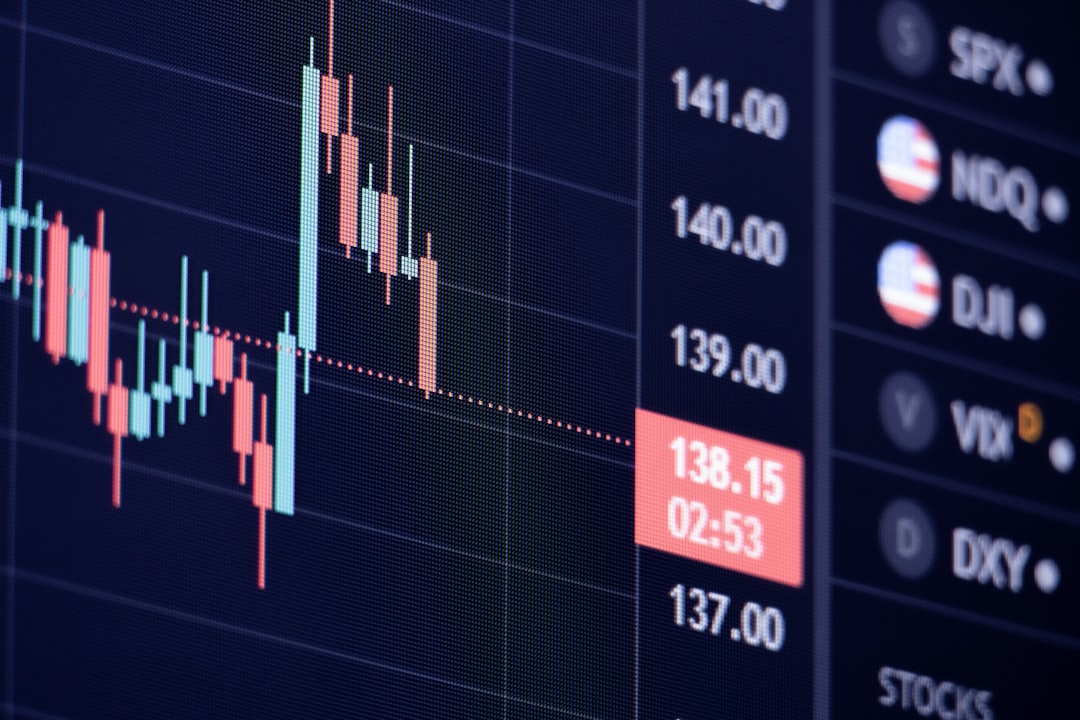
The dynamic world of stock market investing has always been a battleground of wits, where the ability to anticipate market movements reigns supreme. For centuries, traders and investors have grappled with the elusive challenge of identifying trend reversals—those pivotal moments when an asset’s direction shifts gears, often leading to substantial gains or devastating losses. While traditional technical analysis has provided invaluable tools, the sheer volume and velocity of modern market data have pushed the boundaries of human analytical capacity. Enter Artificial Intelligence (AI), a game-changer that is not just enhancing but revolutionizing our approach to trend reversal identification.
The AI Revolution in Trend Reversal Detection
For years, talk of AI in financial markets felt like a futuristic dream. Today, it’s a tangible reality, reshaping how we perceive and react to market signals. The core advantage of AI lies in its ability to process, analyze, and learn from vast datasets at speeds and scales impossible for humans. This capability translates directly into a significant edge when it comes to pinpointing those critical turning points.
Beyond Traditional Indicators: Enhanced Accuracy and Predictive Power
Traditional indicators like Moving Averages, RSI, and MACD have been the bedrock of technical analysis for decades. While effective, they often suffer from lag and can generate numerous false signals, known as “fake-outs.” AI, however, brings a new level of sophistication to the game. Machine learning models, trained on mountains of historical data, consistently outperform these traditional methods. We’re now seeing an incredible 22–38% increase in reversal detection accuracy. This isn’t just a marginal improvement; it’s a paradigm shift that significantly improves the signal-to-noise ratio for traders.
- Multi-Dimensional Analysis: AI doesn’t just look at one or two indicators in isolation. It simultaneously analyzes order flow dynamics, volume profiles, and multi-timeframe divergences. This holistic approach allows the AI to develop a more nuanced understanding of underlying market pressure, filtering out superficial price fluctuations from genuine shifts in sentiment and supply/demand.
- Reduced False Positives: By integrating these diverse data points, AI models become exceptionally adept at distinguishing between temporary pullbacks or rallies and true trend reversals. This reduction in “fake-outs” is invaluable, saving traders from costly premature entries or exits.
In the realm of financial analysis, the article on Identifying Trend Reversals With AI-Enhanced Analytics provides valuable insights into how artificial intelligence can be leveraged to detect shifts in market trends. For those interested in exploring further, a related article that delves into the broader applications of AI in trading strategies can be found at this link. This resource offers a comprehensive overview of how AI technologies are transforming the landscape of investment analysis and decision-making.
Advanced Pattern Recognition: Unveiling Hidden Signals
The market speaks in patterns, but many of these patterns are too subtle, too complex, or too fleeting for the human eye to consistently discern. Deep learning and neural networks, cornerstones of modern AI, are experts at recognizing these intricate, hidden signals that often precede significant structural shifts in the market.
Decoding the Language of the Market
AI systems, particularly those employing Long Short-Term Memory (LSTM) networks and V-formation pattern analysis, are now capable of identifying early warning signs that previously went unnoticed or were dismissed as noise.
- RSI Momentum Divergence Across Multiple Timeframes: While traditional RSI divergence is a well-known reversal signal, AI elevates this by tracking its momentum divergence across various timeframes simultaneously. This multi-timeframe analysis allows for greater conviction in the signal, as a divergence manifesting at both a 1-hour and a 4-hour timeframe, for instance, suggests a stronger underlying shift than one present in isolation.
- MACD Histogram Fades: A fading MACD histogram, especially when coupled with other confirming signals, can indicate a loss of momentum in the current trend before the MACD lines themselves cross. AI, with its granular data processing, can detect these subtle fades earlier and more reliably than a human observer.
- Bollinger Band Squeezes: Bollinger Band squeezes signal periods of low volatility, often preceding a significant price movement. AI not only identifies these squeezes but can also analyze the underlying order flow and volume during the squeeze to predict the direction of the impending breakout or breakdown with higher accuracy.
- V-Formation Pattern Analysis: V-formations, particularly V-pattern capitulation at market bottoms, are powerful reversal patterns. AI can be trained to recognize the specific characteristics of these patterns, including the rapid decline, the sharp bounce, and the volume signature, offering early insights into potential market bottoms.
The Human Element: Sentiment Integration for Holistic Views
Financial markets are, at their core, driven by human emotions—fear and greed. While technical analysis focuses on price and volume, understanding the prevailing market sentiment provides a crucial layer of context. Modern AI tools are now seamlessly integrating real-time sentiment data, offering a truly holistic view of market dynamics.
Listening to the World’s Pulse: News and Social Media Analysis
AI’s ability to process natural language (NLP) has opened up new frontiers in sentiment analysis. By leveraging advanced language models, AI can now gauge the emotional temperature of the market with unprecedented accuracy.
- Real-Time News Sentiment: AI systems continuously scan news articles, financial reports, and regulatory filings. Using advanced NLP models, they can identify positive, negative, or neutral sentiment towards specific assets or the broader market. A sudden spike in negative news, for example, can trigger a panic-driven reversal, which AI can detect and flag.
- Social Media Language Models (RoBERTa): Social media platforms are hotbeds of real-time public opinion. AI models like RoBERTa are trained to understand the nuances of human language, including slang, sarcasm, and emotional tone, across platforms like Twitter, Reddit, and various financial forums. This allows for the detection of sudden shifts in collective mood, such as widespread panic or irrational exuberance, that often precede reversals.
- Google Trends Integration: By analyzing search term frequency and related queries, AI can identify budding narratives or widespread concerns that might not yet be reflected in mainstream news but are bubbling up in public consciousness. A sudden surge in searches for “recession” or “market crash” could foreshadow a reversal driven by fear.
Real-Time Institutional Tracking: Following the Smart Money
Individual traders often feel like minnows swimming in an ocean dominated by whales—large institutional players whose moves can dictate market direction. AI is democratizing this insight by providing real-time visibility into institutional money flow, offering retail investors a glimpse into the “smart money” playbook.
Unmasking Institutional Intent
Understanding where institutional capital is flowing is paramount for anticipating major market shifts. AI excels at sifting through vast amounts of trading data to identify these often-subtle movements.
- “Volume Price Confirmation”: This classic indicator suggests that significant price movements should be confirmed by a corresponding increase in trading volume. AI takes this a step further by analyzing volume at a granular level, identifying instances where institutional accumulation or distribution is occurring under the radar. It can detect unusually high volume on up-ticks during a downtrend (suggesting institutional buying) or high volume on down-ticks during an uptrend (suggesting institutional selling), often days before a clear price reversal.
- Institutional Money Flow Patterns: Beyond simple volume, AI algorithms are becoming sophisticated enough to identify distinct trading patterns associated with large institutional players. These patterns might include specific order sizes, timing of trades, or preferred execution strategies. By recognizing these fingerprints, AI can signal genuine breakouts from false ones, providing a significant lead time. For example, consistent accumulation by multiple large institutions over several days, even if price remains relatively flat, is a strong indicator of an impending move upwards.
In the realm of financial forecasting, the article on advanced forecasting techniques provides valuable insights that complement the discussion on identifying trend reversals with AI-enhanced analytics. By leveraging sophisticated algorithms and data analysis, both pieces highlight the importance of utilizing cutting-edge technology to make informed investment decisions. As markets become increasingly volatile, understanding these trends can significantly impact traders’ strategies and outcomes.
Case Study Success: From Theory to Tangible Results
The theoretical advantages of AI in trend reversal detection are compelling, but real-world results truly underscore its transformative power. Recent case studies provide concrete evidence that AI-generated predictors are not just academic exercises but practical tools for significant value creation.
Shining a Light on AI’s Impact
The success stories emerging from AI-enhanced analytics are beginning to paint a clear picture of its effectiveness.
- VantagePoint AI and Iris Energy (IREN): A notable example comes from VantagePoint AI, which leverages predictive analytics to identify market turning points. In a recent case, their AI-generated predictors successfully identified reversal zones, particularly a “V-pattern capitulation,” in assets like Iris Energy (IREN). For those who capitalized on these AI-identified signals, this led to substantial value increases, with some experiencing 80–135% appreciation in targeted assets. This level of return, derived directly from AI insights, highlights the practical utility and profitability of these advanced analytical approaches. This isn’t about mere hypothesis; it’s about demonstrable financial gains resulting from superior market anticipation.
Next-Gen Forecasting: AI for Every Investor
What once seemed like a futuristic concept reserved for institutional behemoths is now becoming a practical reality for a broader spectrum of market participants. The accessibility and predictive power of AI are democratizing sophisticated analysis, moving it beyond the realm of bespoke, expensive solutions.
The Democratic Power of AI in Finance
The sophistication of AI-enhanced analytics is no longer an exclusive club. As of mid-2025, AI has firmly established itself as a practical and accessible tool, particularly for short-term trading strategies.
- NASDAQ 100 Short-Term Reversals: The impact is particularly evident in high-velocity markets like the NASDAQ 100, where short-term reversals offer frequent trading opportunities. AI models are demonstrating superior predictive power in these volatile environments, offering a crucial edge for day traders and swing traders alike. Their ability to process and react to rapid market changes with lightning speed makes them ideal for navigating such dynamic indices.
- Democratizing Sophisticated Analysis: The development of user-friendly platforms and analytical tools means that individual traders and smaller investment firms can now harness the power of AI-enhanced analytics. No longer do you need a team of quantitative analysts and multi-million dollar supercomputers to gain deep market insights. This accessibility levels the playing field, allowing a wider range of investors to leverage sophisticated analysis for better decision-making. This shift represents a significant move towards an era where AI becomes a standard tool in every serious investor’s arsenal, not just a luxury for the privileged few.
In conclusion, the landscape of trend reversal identification is being irrevocably transformed by Artificial Intelligence. From significantly boosting accuracy and filtering fake-outs to unmasking subtle patterns, integrating real-time sentiment, and tracking institutional money, AI offers a multi-faceted approach that far surpasses traditional analytical methods. The era of AI-enhanced analytics is not just on the horizon; it is here, and it is reshaping how we understand, predict, and profit from the inherent dynamism of the stock market. For investors looking for an undeniable edge, embracing these AI advancements is no longer an option but a necessity.
FAQs
What is AI-enhanced analytics?
AI-enhanced analytics refers to the use of artificial intelligence (AI) technologies to analyze and interpret data in order to identify patterns, trends, and insights that may not be readily apparent to human analysts. This approach can help businesses and organizations make more informed decisions and predictions based on large and complex datasets.
How can AI-enhanced analytics help identify trend reversals?
AI-enhanced analytics can help identify trend reversals by analyzing historical data and identifying patterns or anomalies that may indicate a shift in the direction of a trend. By using machine learning algorithms and advanced statistical techniques, AI-enhanced analytics can detect subtle changes in data that may signal a potential trend reversal.
What are the benefits of using AI-enhanced analytics for trend reversal identification?
Some benefits of using AI-enhanced analytics for trend reversal identification include the ability to process large volumes of data quickly and accurately, the potential to identify trends and patterns that may not be apparent to human analysts, and the ability to make more timely and informed decisions based on predictive insights.
What are some common AI technologies used in AI-enhanced analytics for trend reversal identification?
Common AI technologies used in AI-enhanced analytics for trend reversal identification include machine learning algorithms, natural language processing, deep learning, and neural networks. These technologies enable the analysis of large and complex datasets to identify patterns and trends that may indicate potential reversals.
How can businesses and organizations leverage AI-enhanced analytics for trend reversal identification?
Businesses and organizations can leverage AI-enhanced analytics for trend reversal identification by integrating AI technologies into their existing analytics platforms, investing in AI-powered analytics tools, and training their analysts to use AI technologies to identify and interpret trend reversals in their data. This can help them make more informed decisions and predictions based on predictive insights.